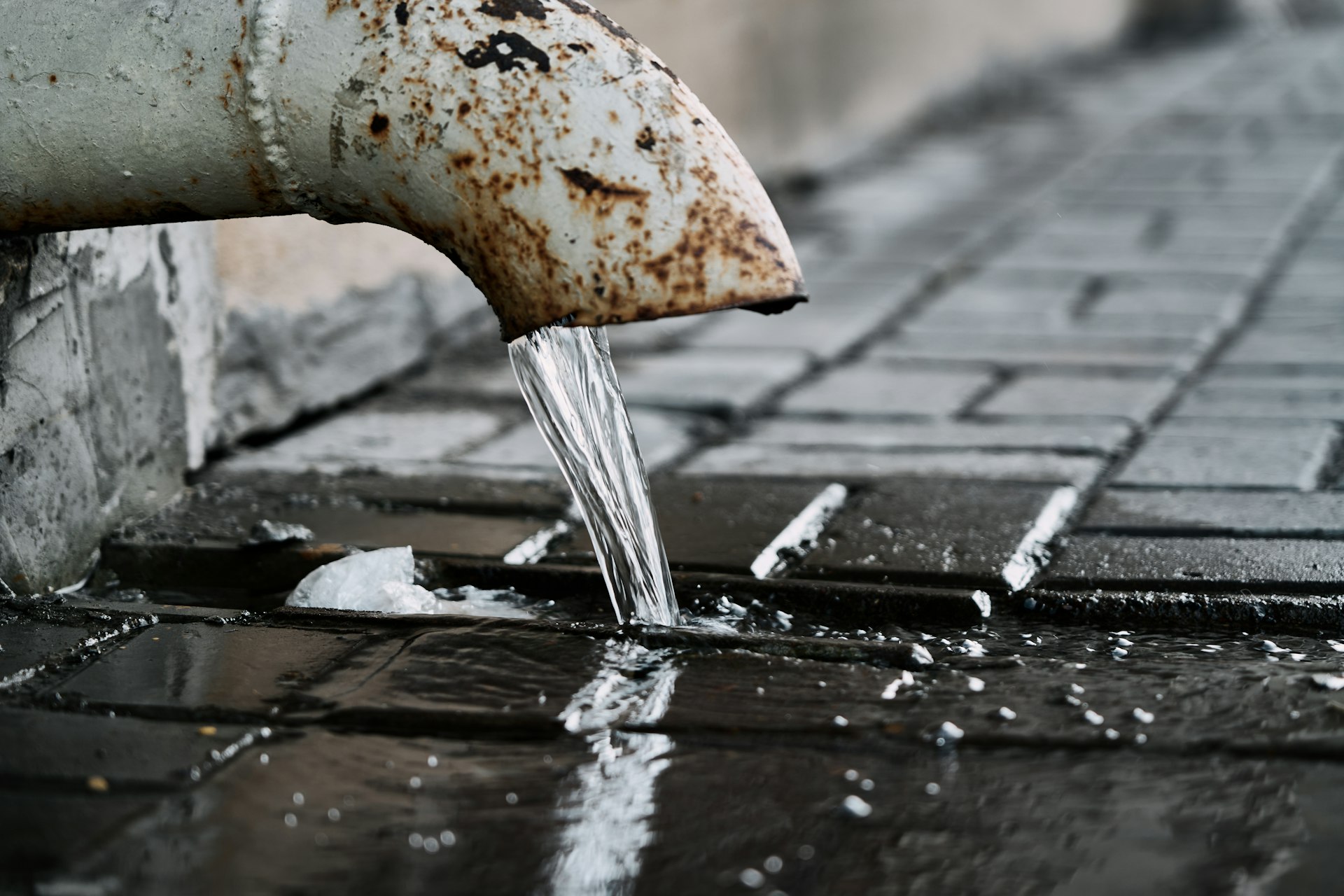
Old pipes · November 6, 2026
Galvanized Pipes in Older Phoenix Homes
How to tell what you have, the warning signs and your options.
Read the guide
Published November 6, 2026 · Maryvale Water Damage Help
Phoenix's monsoon season runs from June 15 to September 30. For homes with flat or low-slope roofs, a single storm can test every seam, drain and patch.
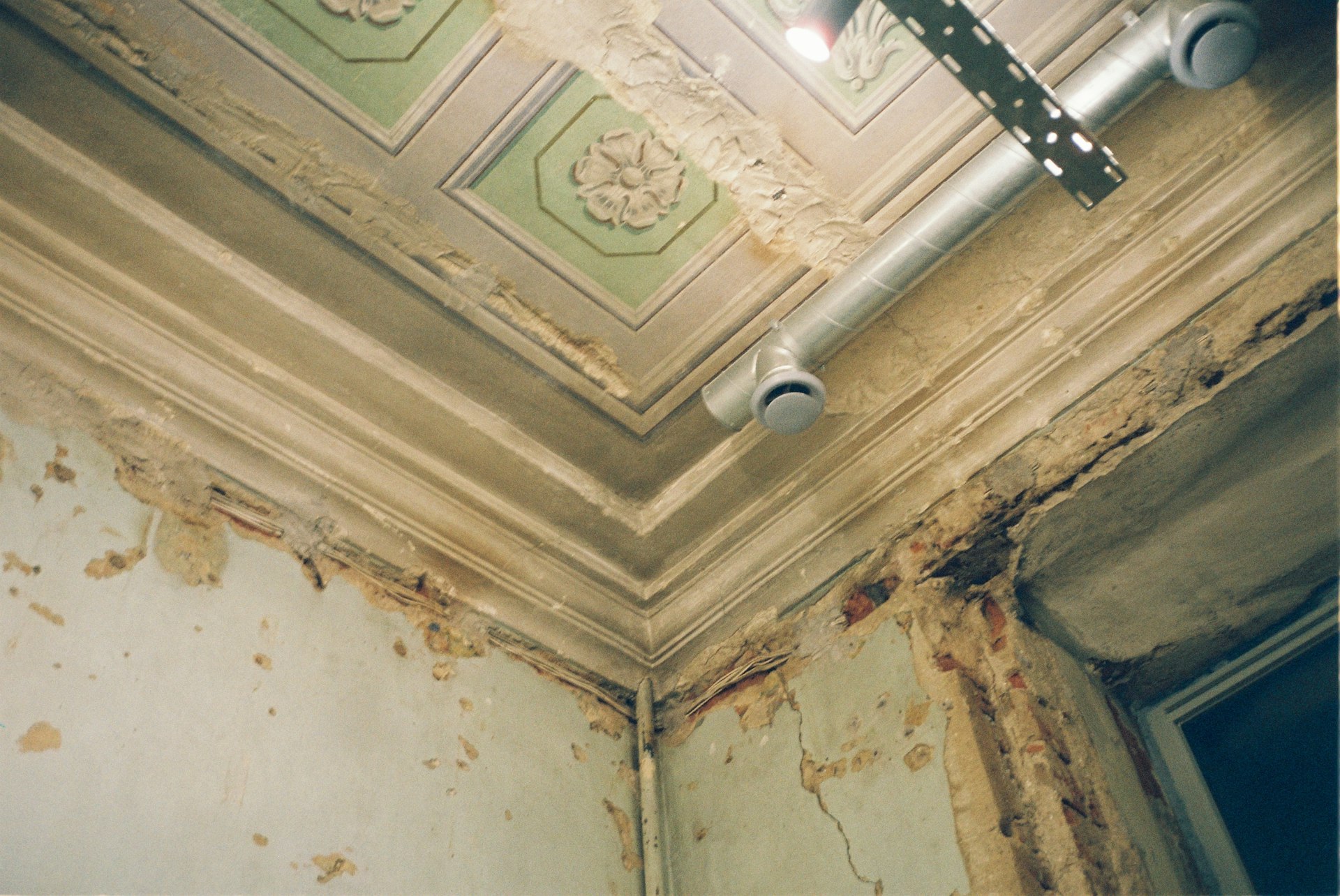
Flat and low-slope roofs were cheap to build and suited the dry climate, so many Maryvale ranch homes have them. Some use built-up layers of tar and gravel, some use roll roofing, and many have been covered with spray polyurethane foam, which insulates well and sheds water when its coating is intact. They work fine most of the year. The trouble comes when a lot of rain falls fast and has to get off a nearly level surface.
Flat roofs drain through scuppers, openings in the parapet wall, or through roof drains. When leaves, gravel or debris block them, water ponds. Ponding water finds any crack in the tar or foam, any lifted seam and any gap around a vent, pipe or cooler stand. Wind-driven rain can also push water under flashing where the roof meets a wall. Once inside, it soaks insulation and shows up as a ceiling stain, often some distance from where it entered.
Water on the floor right now? Call (623) 269-8054 for a local provider.Open 24/7 · Talk to a local provider in Maryvale
Call 24/7 (623) 269-8054Spray foam is protected by an elastomeric coating that blocks the sun. Over years, sun and heat wear the coating thin. Exposed foam turns brown, gets brittle and lets water in. Most foam roofs need recoating every several years depending on the product and exposure. If your foam looks chalky, brown or pitted, ask a roofer about recoating before the storms.
In May or early June, have the roof looked at. Clear scuppers and drains, remove debris, and check the seams and the area around the cooler and vents. Trim branches that hang over the roof. Inside, look at ceilings for old stains so you can tell if a new one appears. Keep a tarp, buckets and towels where you can find them.
Ceiling stain after a storm? Talk it through on the phone.Open 24/7 · Talk to a local provider in Maryvale
Call 24/7 (623) 269-8054If water starts dripping, put a bucket under it and move belongings away. If the ceiling bulges, poke a small hole at the lowest point over a bucket to let the water out in a controlled way; this prevents a larger section from falling. Turn off light fixtures that are wet at the breaker. Do not go on the roof during the storm.
Once it is safe, look at the roof from the ground or a ladder for debris, washed-off gravel, torn flashing and ponding. Photograph damage with the date visible. Call a licensed roofer for repairs and a restoration company to dry the inside. Drying should start right away, even if the roof repair takes a few days; ask the roofer for a temporary patch.
A small stain can hide a large wet area of insulation above. Wet insulation is heavy, loses its value and can grow mold, so it is often removed. Ceiling drywall that sagged or stayed wet long is usually replaced. A provider with a moisture meter can show how far the water spread before anything is cut. See flat roof leak damage.
Rusty water and a wet wall? Ask about old pipe leaks.Open 24/7 · Talk to a local provider in Maryvale
Call 24/7 (623) 269-8054Evaporative coolers add their own water to the roof. A stuck float or rusted pan can keep water running toward the cooler opening for days. Check the cooler monthly in season and look for stains near its vent inside.
Policies usually cover sudden storm damage, such as wind tearing part of the roof, but often exclude leaks from an old or poorly maintained roof. Photos, the storm date and a roofer's written note on the cause help your claim.
Older built-up roofs with a gravel top layer can lose gravel in heavy rain and wind, exposing the tar to sun. Bare spots crack and leak. After big storms, look for gravel piled at scuppers or washed onto the ground.
Water on the floor right now? Call (623) 269-8054 for a local provider.Open 24/7 · Talk to a local provider in Maryvale
Call 24/7 (623) 269-8054For the roof, call a licensed roofer. For water inside, call (623) 269-8054 to reach a local restoration provider who can start drying the same day.
Many flat roofs are surrounded by short parapet walls. Water can enter through cracks in the stucco on top of the parapet or where the roof meets the wall. A roofer should check the caps and flashing as part of a pre-season inspection.
Clear drains are the cheapest roof insurance.
Ceiling stain after a storm? Talk it through on the phone.Open 24/7 · Talk to a local provider in Maryvale
Call 24/7 (623) 269-8054Keep scuppers and drains clear, keep foam coatings fresh, check around the cooler and inspect before June 15. When a leak starts, catch the water, protect the ceiling, and start drying the same day.
Questions about flat roof leaks in monsoon season? Call (623) 269-8054 to reach a local Maryvale provider, 24 hours a day.
Old pipes · November 6, 2026
How to tell what you have, the warning signs and your options.
Coolers · November 6, 2026
How coolers leak, the warning signs and upkeep that prevents it.
Sewer lines · November 6, 2026
Why old drain lines fail, warning signs and repair options.
With recoating on schedule, many last decades; without it, much less.
A temporary patch may be possible when safe, but have a licensed roofer do the repair.
Talk to a local provider
One call connects you with an independent restoration company that works in Maryvale and west Phoenix. They explain the plan and how the price is set before anything starts.
(623) 269-8054